cat-cmms · 2023-10-13
Average engineering skill score to identify the training demand
How facility leaders quantify individual and team engineering competencies, benchmark gaps against plant requirements, and prioritize technical training.
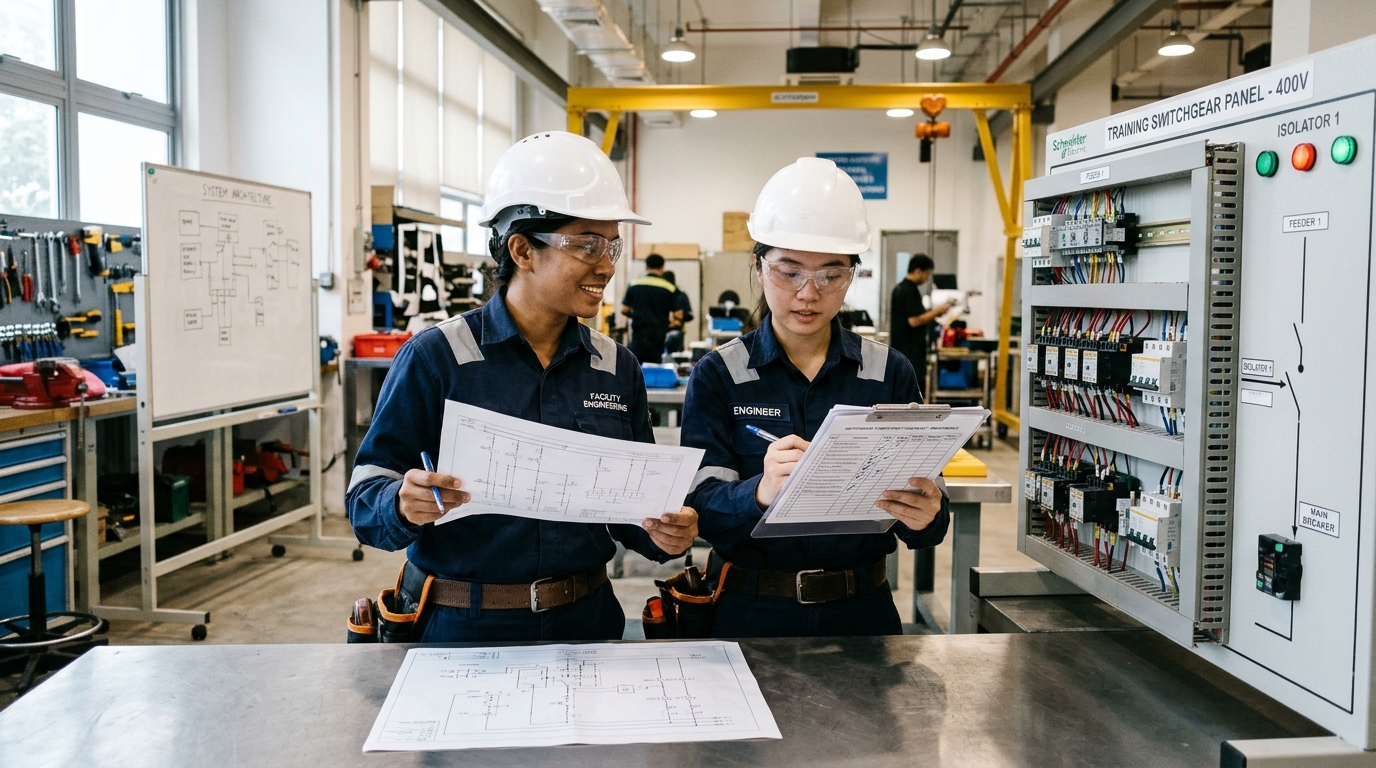
Identifying the average engineering skill score to determine training demand is a structured, quantitative way for Chief Engineers and facility managers to evaluate team readiness across electrical, HVAC, plumbing, and CMMS operations.
Measuring Individual and Group Skill Scores
- Assess Individual Competencies: Score each technician against practical role criteria—such as switchgear safety (LOTO), multimeter diagnostics, HVAC troubleshooting, and preventive CMMS logging—using field evaluations and practical tests.
- Calculate Individual & Team Averages: Average each technician's scores across core modules, then compute the property-wide group average to spot systemic skill imbalances across shifts.
- Define Property Benchmarks: Set a target competency score aligned with asset criticality (for example, 20 kV switchgear properties require higher electrical protection scores than small residential sites).
- Identify & Prioritize Gaps: Compare group averages against the target benchmark. Focus training budgets first on disciplines furthest below threshold or highest in safety impact.
Designing and Implementing Training Programs
Build targeted workshops, bench-panel hands-on drills (such as DOL starter wiring and CT shorting-link safety), or on-the-job mentorship pairings directly addressing the lowest-scoring modules.
Continuous Monitoring & Benchmark Calibration
- Periodically reassess the engineering team's average skill score after each training cycle to verify measurable improvement in first-time fix rates and reduced reactive breakdowns.
- Update benchmark expectations whenever new facility systems (such as ESP IoT telemetry or Energy Cost Dashboards) are commissioned on site.