cat-electrical · 2023-10-13
Enhancing Transformer Reliability with DGA Analysis Tests
How Dissolved Gas Analysis (DGA) identifies incipient overheating, partial discharge, and arcing in oil-immersed power transformers before catastrophic insulation failure.
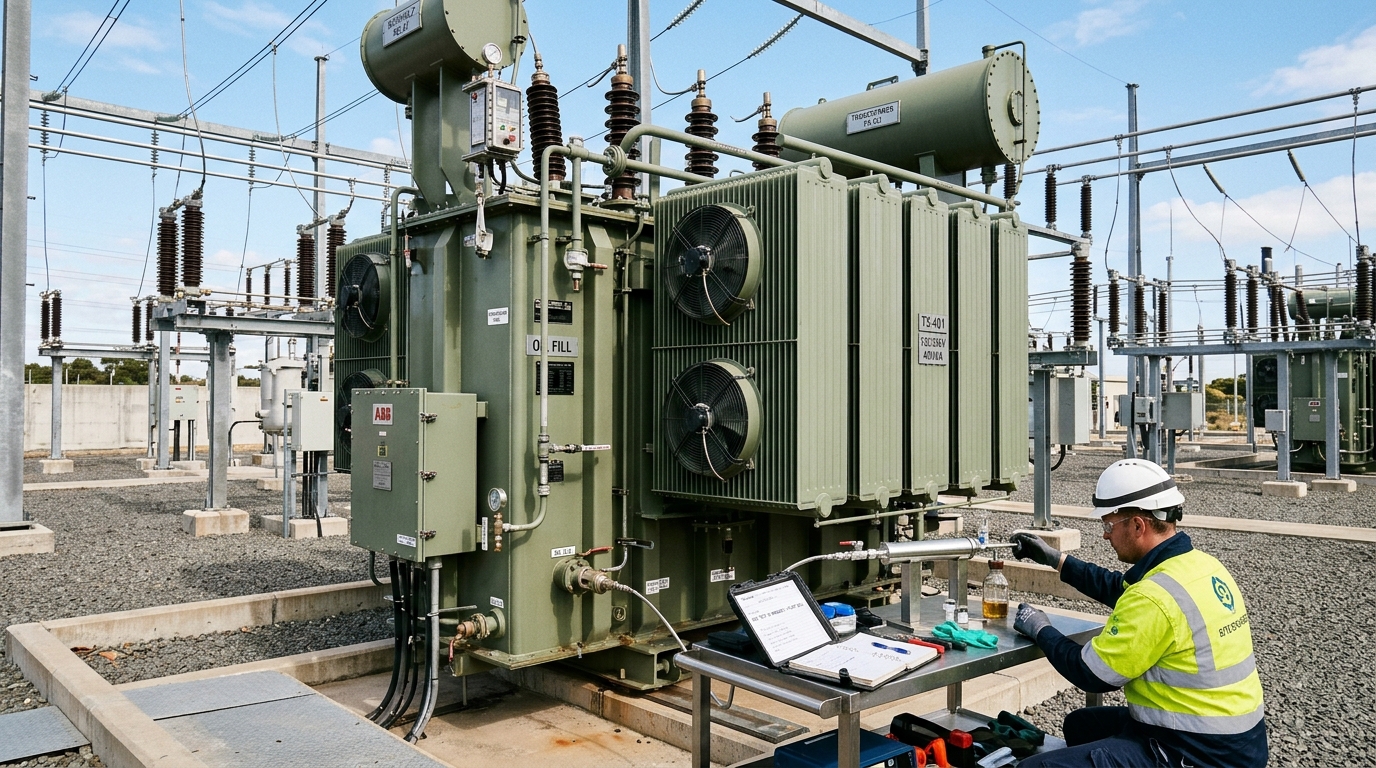
Power transformers are high-capital cornerstones of medium-voltage electrical distribution. Protecting transformer longevity requires proactive oil diagnostics—and Dissolved Gas Analysis (DGA) remains the gold standard for detecting internal electrical and thermal faults while the unit stays in service.
Understanding Dissolved Gas Analysis (DGA)
Under thermal stress or electrical discharge, mineral insulating oil and cellulose winding paper decompose into trace fault gases that dissolve directly in the transformer oil.
- Key Fault Gases Monitored: Hydrogen (H2) for partial discharge, Methane (CH4) and Ethane (C2H6) for low-temperature overheating, Ethylene (C2H4) for severe hot spots, and Acetylene (C2H2) for high-energy arcing.
- Trend & Ratio Diagnostics: Comparing gas ppm concentrations and Duval Triangle / Rogers Ratios across annual oil samples reveals fault progression long before mechanical Buchholz or DMCR relays trip.
Benefits for Reliability & Facility Budgeting
- Early Fault Detection: Identifies loose tap-changer contacts or localized core overheating well ahead of winding breakdown.
- Avoiding Catastrophic Outages: Prevents sudden transformer failure, oil spills, and multi-week facility downtime.
- Extended Asset Life: Enables timely oil filtration (purification), drying, and scheduled maintenance that extend transformer service life by decades.
Recommended Implementation Cadence
Schedule annual DGA + breakdown voltage (BDV) oil testing for mission-critical commercial and hotel substations, and cross-reference gas trends with 20 kV cubicle shunt-trip & DMCR protection interlock tests.