cat-electrical · 2023-10-13
Shunt Trip Mechanism Test on MV Cubicle & DMCR Protection
The function test is carried out to ensure performance of the protection system especially for the shunt trip mechanism in the cubicle MV is working well, before integrated with the D. M. C. R Protection relay for the oil transformer.
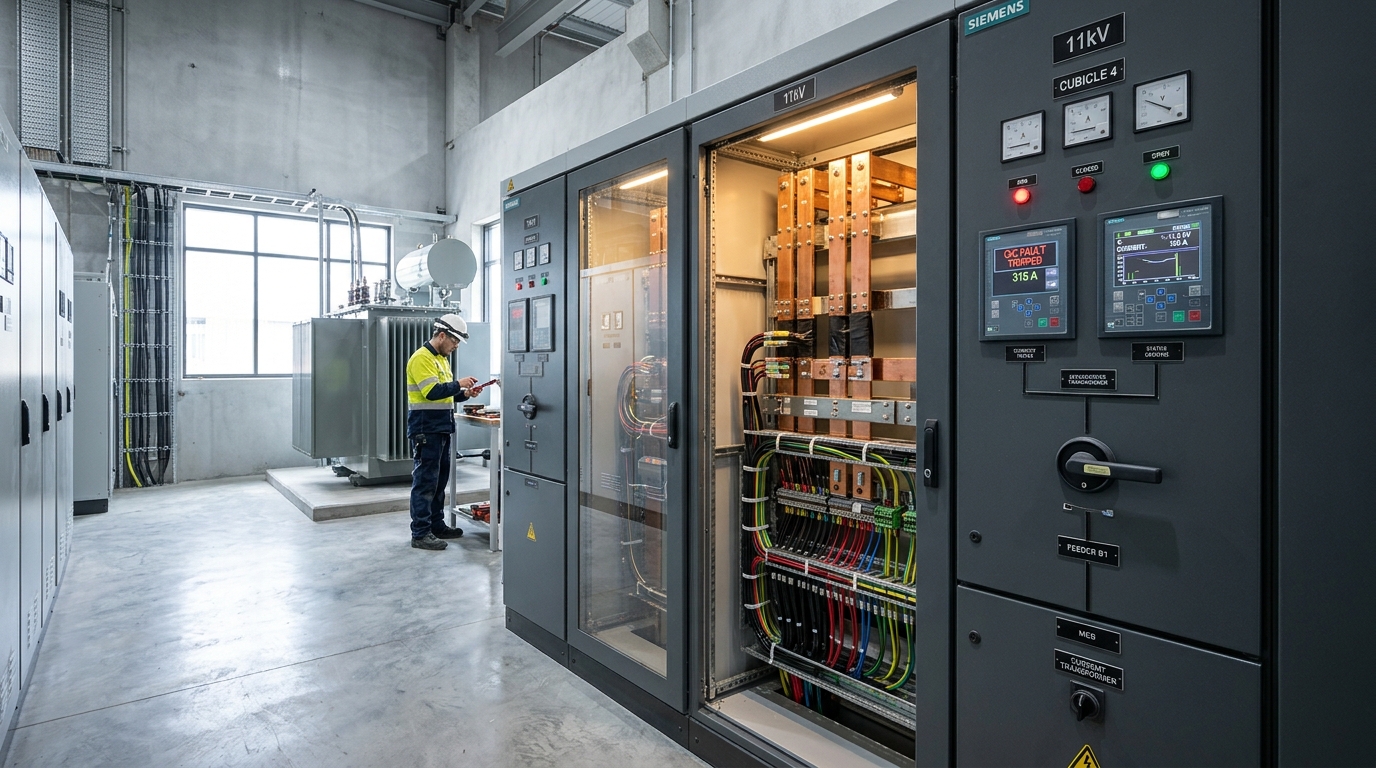
The function test is carried out to ensure performance of the protection system especially for the shunt trip mechanism in the cubicle MV is working well, before integrated with the D.M.C.R. Protection relay for the oil transformer.
Purpose of MV Cubicle Shunt Trip Testing
In a 20 kV medium-voltage switchgear cubicle protecting an oil-immersed power transformer, the shunt trip coil acts as the final mechanical actuator that releases the Load Break Switch (LBS) or Vacuum Circuit Breaker (VCB) latch whenever an electrical or thermal fault signal is raised.
If a shunt trip coil fails to energize under fault voltage—or if the mechanical linkage is stiff from dust and humidity—a D.M.C.R. (Detection Measure Control Relay / Buchholz-style oil relay) alarm will fail to isolate the transformer in time.
Pre-Integration Test Procedure
- Isolate the medium-voltage cubicle from the primary busbar and verify zero voltage before opening control compartments.
- Measure the shunt trip coil resistance (Ω) and confirm auxiliary control supply voltage (typically 110 VDC, 24 VDC, or 220 VAC) matches nameplate ratings.
- Trigger a simulated dry-contact close across the remote trip terminals and record mechanical latch release time.
- Reset the tripping mechanism and confirm auxiliary position microswitches update panel annunciator status cleanly.
D.M.C.R. Oil Transformer Relay Interlock
Once the cubicle shunt trip mechanism passes isolated bench/panel verification, connect the D.M.C.R. stage-2 trip output (excessive gas accumulation, oil over-temperature >= 95°C, or abnormal internal tank pressure) into the cubicle trip loop and execute a full loop commissioning test before energizing the transformer.